A capability-first architecture
The homepage introduces the core processes; dedicated pages let buyers evaluate each one in depth.

A capability-led website that gives engineers and buyers a direct route from process detail to a useful request for quote.
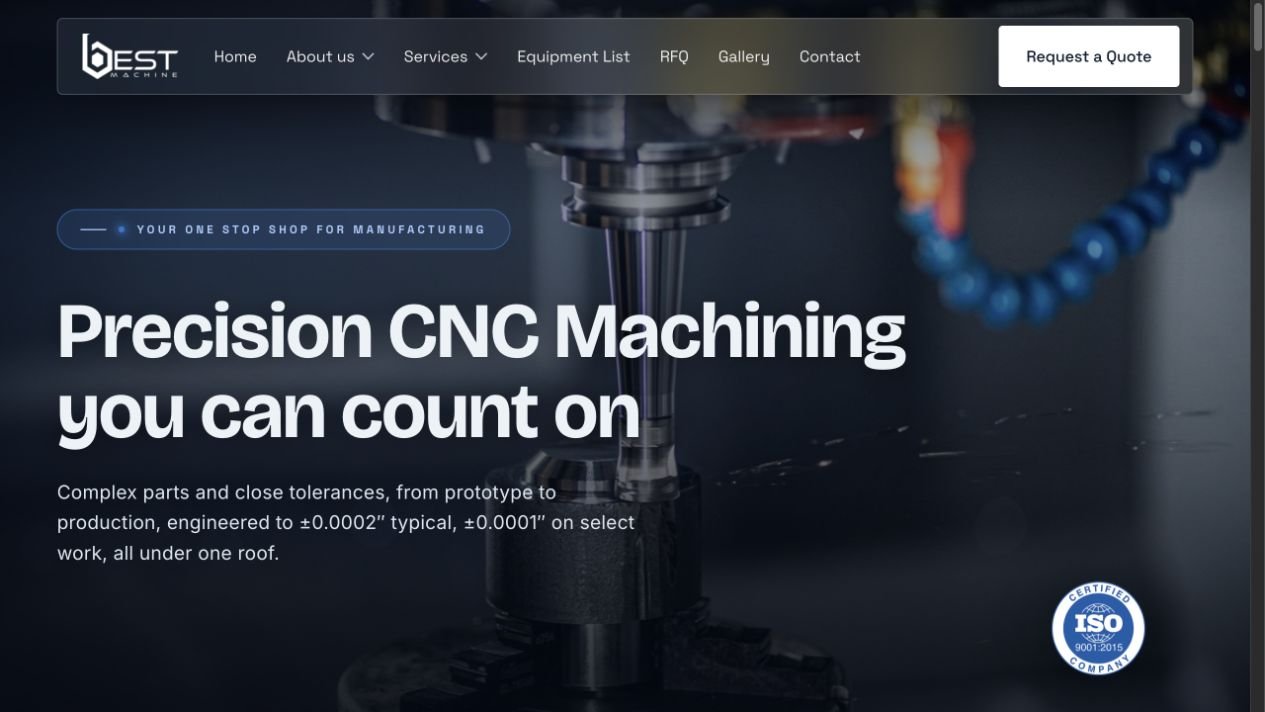
A buyer evaluating close-tolerance CNC work must quickly understand which processes are in-house, what the machines can handle, how quality is checked, and how to send a print. Multiple service lines can become hard to scan without a clear hierarchy.
The site organizes CNC milling, turning, Swiss turning, EDM, marking, and bending into distinct destinations. The strongest pages pair application context with technical specifications, equipment proof, and a quote action.
A page should help a buyer decide whether to send a drawing. These are the visible decisions shaping the live experience.
The homepage introduces the core processes; dedicated pages let buyers evaluate each one in depth.
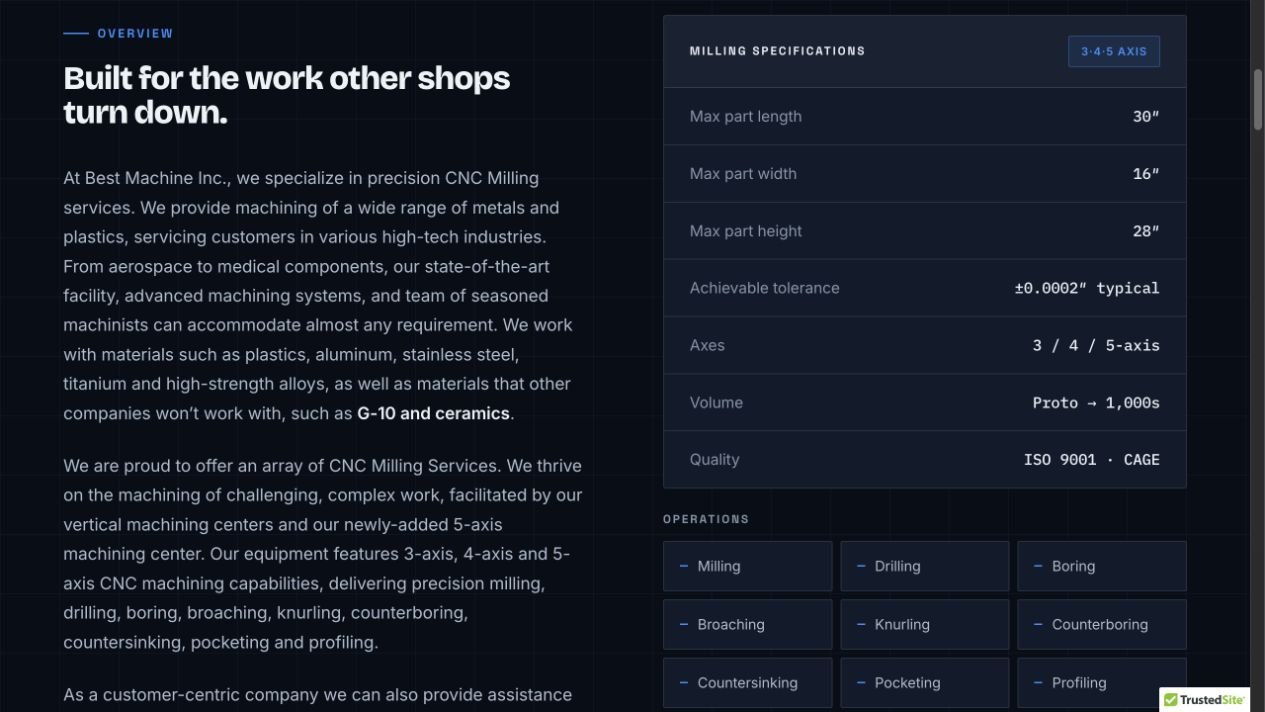
The CNC milling page includes axes, part envelope, tolerance information, materials, operations, and equipment.
The request-for-quote page invites drawings or models and explains what the team needs to assess the job.
The deeper page gives a buyer specific information to evaluate and a reason to keep moving.
View this live pageTarget themes are grounded in the visible site structure and buyer language. They describe content focus, not verified rankings or traffic gains.
Search targets are editorial themes inferred from the live pages. Performance claims require Search Console or analytics access.
Individual capability pages carry more than a process name: they include use cases, specifications, materials, and related equipment.
Service detail pages link directly to the RFQ destination.
Shop imagery, gallery, equipment, and quality details give buyers material to check before contacting the team.
We can review the pages, search paths, and quote journey that matter most to your buyers.